The Kitchen Table Laboratory: Why Untidy Science Homework Matters
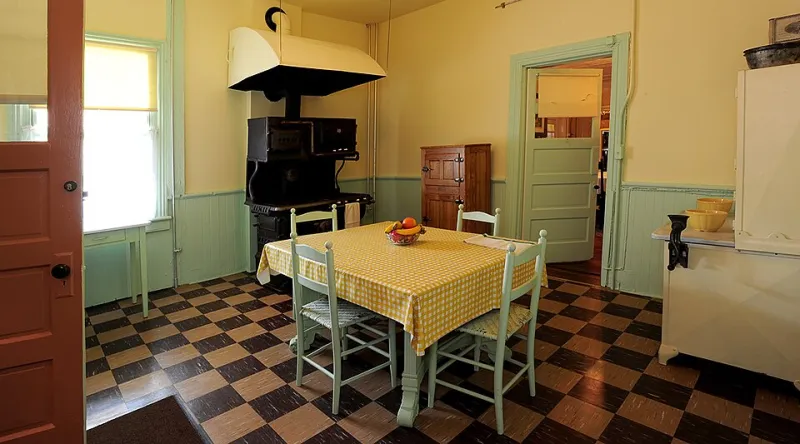
Photo: Frank Ruggles, Public domain, via Wikimedia Commons
Science homework is often judged by its surface. A neat page, a completed table and a tidy diagram suggest diligence. Yet some of the most valuable learning at home looks considerably less orderly. A spilled drop of water on a tea towel, a smeared plate of cooling chocolate or a bridge made from folded paper and coins can be evidence of testing, revising and thinking again. This is not an argument for chaos. It is an argument for recognising productive disorder when it appears on the kitchen table.
The problem with a pristine page
Worksheets have their place. They can consolidate vocabulary, provide a record and help families understand what is being taught. But when every step is prescribed, pupils can complete the task without making many decisions. The work looks impressive, yet the thinking may be thin. Open-ended investigation asks pupils to choose a method, notice an unexpected result and explain a change of plan. Those processes are rarely tidy, and they are difficult to capture on a worksheet.
Parents often tidy up too soon, sometimes literally. The instinct is understandable: a clear table feels calm, and a finished-looking page feels like progress. But the half-finished bridge, the labelled cup of water and the scrap of paper with a revised prediction are part of the record. If they disappear before the pupil has explained them, the learning can disappear with them.
What good messy science looks like
Productive mess has boundaries. It takes place on a tray or a wipeable surface, with equipment that is safe for the age of the child. It has a question, even if the question changes. It includes some form of recording, whether that is a table, a photograph with labels or a few sentences written afterwards. Most importantly, the adult asks questions rather than supplying answers.
A useful rule for families is to separate the doing from the writing up. Let the investigation happen, then pause for a short conversation before anything is cleared away. A photograph of the setup, taken before tidying, can be worth more than a perfectly ruled table.
Activity one: testing materials
A simple materials test needs little more than a tray, a selection of household materials and a small amount of water. Pupils might compare paper, card, fabric, foil, cling film and a tea towel for absorbency or strength. They should make a prediction first, then test each material in the same way. How much water does each hold? How far does a drop spread? Which material keeps a paper shape driest?
The mess is part of the evidence: damp patches, curled paper and a wet tray show what happened. Adults should supervise scissors, protect the surface and wipe up spills promptly to avoid slips. Pupils can record results in a simple table and then answer questions such as: Which material performed best? Was the test fair? What would you change if you repeated it? The activity links naturally to discussions of waterproof clothing, food packaging and household cleaning.
Activity two: melting chocolate
Melting chocolate is a familiar kitchen change, but it can be turned into a careful comparison. With adult supervision, pupils can place small pieces of milk chocolate and dark chocolate in separate bowls over warm water, or on plates set in a warm water bath. They can time how long each takes to soften and begin to melt. Grated chocolate can be compared with a solid piece to show how surface area affects the rate of change.
Safety matters here. Hot water should be poured by an adult, bowls should be stable and the chocolate should not be heated directly over a hob. Pupils should not eat the experimental chocolate, and anyone with allergies should avoid handling ingredients that pose a risk. The bowls and plates should be washed afterwards. Questions to ask include: Which chocolate changed first? Why might that be? What happens when the chocolate cools? Is the change reversible? The activity supports early understanding of states of matter and fair testing without requiring specialist equipment.
Activity three: paper bridges
A paper bridge is an exercise in structure and failure. Pupils can rest a sheet of paper across two piles of books and add coins or small weights to the middle. They can then test folded shapes: a flat sheet, a corrugated fold, a tube and a layered sheet. The bridge that holds the most coins is not necessarily the best bridge, and the discussion should explore why.
Coins and small weights are choking hazards for very young children, so supervision is essential. Pupils should use the same span and the same size of paper to make the comparison fair. The mess is modest but meaningful: torn folds, collapsed bridges and a scatter of coins all show the testing process. Useful questions include: Which shape was strongest? Why do you think that was? What would make the bridge stronger without using more paper?
How parents can help without taking over
The most helpful parental contribution is often a well-placed question. Ask what the pupil expects to happen, why they think so and what they noticed. Resist the urge to correct a prediction before it has been tested. If a result is surprising, say so and ask what might explain it. Allow a few moments of silence; thinking often needs time.
Families do not need a dedicated laboratory. A tray, a wipeable cloth and a small shelf or box for equipment are enough. Fifteen to thirty minutes is usually sufficient. The written outcome can be brief: a labelled photograph, a three-sentence conclusion or a short voice note transcribed by an adult. The aim is not a flawless presentation but a clear account of what was tried and what was learned.
The case for a little mess
A kitchen table that has hosted an investigation is not the same as a table that has been neglected. The difference is structure: a question, a fair attempt, a record and a conversation. When parents tolerate a little controlled mess, they give pupils permission to test ideas rather than merely reproduce them. That is a valuable lesson, and it rarely arrives in a neat rectangle.