Frost, Frames and Fair Tests: Bolitho's November Growing-Season Trial
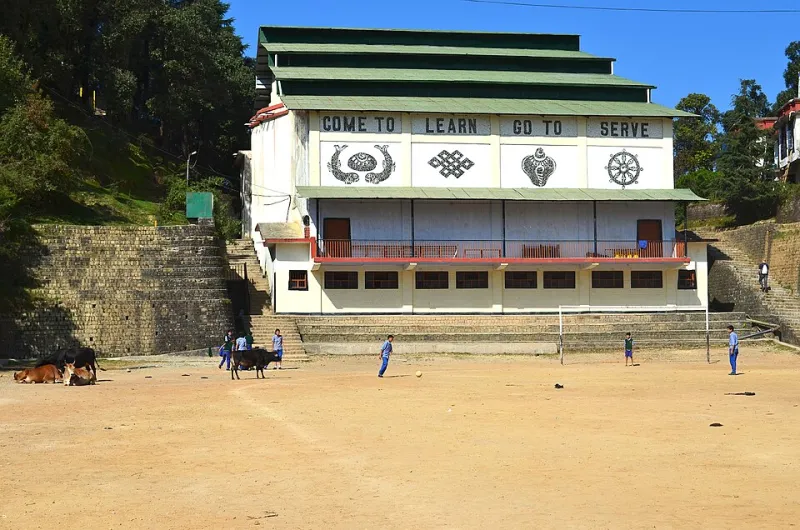
Photo: Anne-Mette Jensen from London, UK, CC BY-SA 2.0, via Wikimedia Commons
On a grey November morning, the school garden at Bolitho becomes a laboratory of a very practical kind. A group of pupils is arranging recycled clear plastic panels over wooden offcuts, checking thermometers and labelling seed trays. Their question is simple enough to state and demanding enough to test: can a school garden extend its growing season into early winter without relying on powered heaters, lamps or heated propagators?
The project has been timed for November 2026, when the first sharp frosts are a realistic possibility in our corner of west Cornwall. The maritime climate here is mild for much of the year, but cold nights can still catch tender plants and ambitious gardeners unaware. The pupils are therefore treating the cold frame not as a guarantee of warmth but as a hypothesis to be examined.
Why a cold frame is more than a wooden box
A cold frame is a low, transparent-covered structure that traps some of the sun's energy and reduces heat loss from the soil and plants inside. It does not create a tropical environment. It moderates extremes. During the day, sunlight passes through the cover and warms the air and soil. At night, the cover slows the escape of that stored warmth and offers some protection from frost and wind.
The pupils have been discussing this in terms of insulation and microclimate. Insulation is not a magical barrier; it is a reduction in the rate at which heat moves from a warmer place to a cooler one. A microclimate is the local set of conditions in a small area, which may differ from the wider weather forecast because of shelter, aspect, surface materials or nearby walls. A cold frame beside a south-facing wall is not the same experiment as a cold frame in an open, exposed bed. The pupils have therefore had to decide not only what to build but where to place it.
Designing a comparison that can be trusted
The trial uses three conditions. One set of seedlings remains indoors on a bright windowsill. A second set is placed outdoors with no cover. A third set is placed outdoors beneath the pupils' recycled cold frames. The indoor condition is not a perfect control for a garden, but it provides a useful reference point for growth in a warmer, more stable environment. The exposed outdoor condition shows what happens without protection. The covered outdoor condition tests the intervention itself.
To make the comparison fair, the pupils have agreed on shared procedures. The same type of compost is used in each tray. Seedlings of the same hardy variety are chosen, and trays are labelled so that records can be matched accurately. Watering is carried out with a small measured volume, and the team has discussed the difficulty of keeping watering identical when temperature and evaporation differ. Rather than pretending this problem does not exist, pupils are recording soil moisture alongside temperature so that the limitation is visible in the evidence.
Temperature is being logged with simple minimum and maximum thermometers placed at plant height. Pupils record readings at consistent times of day, including first thing in the morning before the day has warmed. They also note visible frost, condensation on the inside of the cover, leaf colour, leaf number, seedling height and any signs of damage. The aim is not to produce a single triumphant number but to build a picture from several kinds of observation.
Microclimates around the grounds
The school grounds offer several possible sites, and this has become part of the inquiry. A frame near a wall may be sheltered from wind, but it may also receive less light or more reflected heat depending on the surface. An open bed may be colder at night but brighter during the day. Pupils have been mapping these differences and explaining why a fair test requires each condition to be kept in a consistent location once the trial begins.
This is where the project connects strongly to pupil research. The pupils are not simply following a recipe. They are making decisions, explaining them and recognising that every decision has consequences for the strength of the evidence. When one group suggested moving a frame to a sunnier spot halfway through the week, the class discussion turned to confounding variables. A move might improve the plants, but it would also make the temperature record harder to interpret. The frame stayed where it was, and the suggestion was recorded in the project notes.
Keeping the inquiry honest
The pupils have been encouraged to avoid overclaiming. A cold frame may reduce frost damage in this trial, but one November and one set of trays cannot prove that every school garden should use one. Replicates are limited by space, and the indoor windowsill is warmer but not identical to a greenhouse. Results will be reported as patterns and tentative conclusions, not as certainties.
Safety has also shaped the design. The frames are made from recycled clear plastic and timber offcuts rather than glass. Edges are checked by an adult, covers are secured against wind, and the frames are opened briefly on milder days to prevent overheating and condensation build-up. Pupils have been reminded that a closed frame can become surprisingly warm in winter sunshine, so ventilation is part of responsible use.
A doorstep version for families
Families can try a safe, small-scale version at home. Use a clear plastic storage box or a sturdy clear tray with adult supervision, and place it over a labelled pot of hardy salad leaves or overwintering seedlings. Compare it with an identical uncovered pot nearby. A simple minimum and maximum thermometer, or regular readings from an ordinary thermometer at the same times each day, will give children something concrete to record.
The family version should avoid glass, keep covers secure against wind and never leave young children unsupervised around the setup. On sunny days, the cover should be lifted briefly to prevent overheating. Families can log temperature, soil moisture, leaf appearance and any frost damage in a notebook. The value lies less in producing perfect plants than in asking a clear question, making a comparison and discussing what the evidence does and does not show.
What the pupils will report
At the end of the trial, the pupils will present their temperature logs, seedling records and photographs alongside a short account of what they would change next time. The school garden may gain a few more weeks of hardy growth, or it may not. Either outcome is useful. The central achievement is a group of pupils learning to design a fair comparison, respect the limits of their data and explain a scientific idea through practical work in the open air.