Weighing What We Leave: A Week of Lunchtime Waste Data at Bolitho
Lunchtime is one of the busiest periods in any school, and also one of the most revealing. Between the first tray arriving and the final bin lid closing, a great deal of information passes unnoticed: what was served, what was eaten, what was left behind and what was discarded before it had a chance to be chosen. At Bolitho, a group of pupils recently turned that everyday flow into a formal investigation. Over one week, they sorted, weighed and recorded lunchtime waste, then converted the results into graphs and practical recommendations for the school community.
The project was designed as an audit rather than a campaign. Its purpose was not to shame individuals or to make sweeping claims about appetite, but to establish a dependable baseline. Once a school knows what is actually being thrown away, and in what quantities, it can make measured changes and test whether they work. That principle sits at the heart of pupil research at Bolitho: observe carefully, record honestly and let the evidence guide the next question.
Why a lunchtime bin audit?
Food waste is an unusual subject because it is both familiar and invisible. Most pupils see the bins, but few see the aggregate picture. A single discarded apple core seems trivial; hundreds across a week tell a different story. A half-eaten sandwich may reflect a rushed lunchtime, an unfamiliar filling or a portion that was simply too large. Packaging waste raises separate questions about procurement and family choices. Only by separating these streams can a school begin to understand where change is possible.
The audit also offered a strong lesson in data literacy. Pupils had to decide what counted, how to categorise it and how to compare fairly. They quickly discovered that raw totals can mislead. A year group with more pupils will usually produce more waste in absolute terms, so the team needed to express results per pupil and per lunch sitting. This is precisely the kind of reasoning that science teaching aims to develop: the move from a striking number to a meaningful comparison.
Planning a safe and ethical audit
Before any waste was handled, the project was planned with safety and ethics in mind. Pupils did not touch food waste directly. They wore gloves, used tongs and worked at a designated sorting station supervised by staff. Handwashing was built into the start and end of every session, and clean surfaces were kept separate from waste containers. Sharp items such as broken packaging were not handled by pupils; they were set aside for an adult. Allergen awareness was central: pupils did not taste anything, did not open sealed food and followed the school's usual food-safety protocols at all times.
The ethical dimension was just as important. The audit was not designed to identify individual pupils or to comment on particular families. No names were recorded, and no photographs were taken that could link waste to a person. Results were reported only as group totals and averages. The team also avoided language that implied blame. Catering staff were treated as partners in the inquiry, not as the subject of criticism. This mattered because a successful audit depends on trust: pupils needed to feel that the data would be used to improve systems, not to single anyone out.
The method: sort, weigh, record
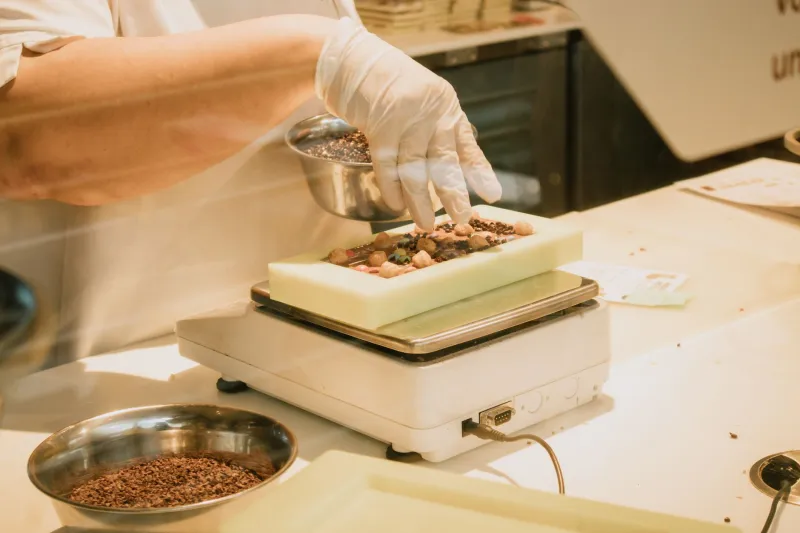
The audit ran for five consecutive lunchtimes. At the end of each sitting, the team collected waste from agreed locations and separated it into broad categories: unfinished served food, fruit and vegetable peelings, packaging, and general non-food waste. The categories were kept deliberately simple so that recording remained consistent. A set of digital scales was used for weighing, with a spare set available in case of battery failure. Pupils recorded each weight on a standard sheet, alongside the date, the lunch sitting and the estimated number of pupils present.
Consistency was the watchword. The same scales were used in the same position, and the same pupils carried out the weighing wherever possible. Where a category was difficult to separate, the team recorded a note rather than guessing. At the end of each session, waste was returned to the correct stream. The resulting dataset was modest but reliable, which is far more useful than a large and untidy one.
What the data showed
Across the week, the audit did not produce a single simple story. The largest avoidable category was served food that had been taken but not eaten. Packaging formed a substantial but separate stream, and its pattern differed from that of food waste. When results were expressed per pupil, some of the apparent differences between year groups narrowed considerably. This was an important finding in itself: without normalisation, the school could easily have drawn the wrong conclusion.
There were also differences in the character of waste. Younger pupils tended to leave more of a main meal, while older pupils generated more packaging and unfinished snacks. Whole fruit was sometimes discarded untouched, which suggested that access and timing mattered as much as preference. The team was careful not to overstate these patterns. One week is a snapshot, not a verdict. Even so, the data was strong enough to identify sensible questions for the next stage.
Turning numbers into graphs
The pupils presented their findings using clear, honest graphs. A bar chart showed total weight by category, while a stacked bar chart compared year groups after adjusting for pupil numbers. A line graph displayed daily variation, which helped the audience see that weather, menu and timetable can all influence waste. For younger audiences, a pictogram offered an accessible summary. Each graph carried a clear title, labelled axes and a note explaining what had been measured.
The team also included measures of spread rather than relying only on averages. This prevented a single unusual day from dominating the story. Where percentages were used, they were accompanied by the underlying counts so that readers could judge the size of the sample. The overall message was deliberately measured: the audit had revealed patterns worth acting on, but it had not produced a complete explanation of why those patterns existed.
From graphs to family-friendly recommendations
The final stage was to translate evidence into practical suggestions. The pupils proposed offering smaller default portions with the option to return for more, and introducing clearer taster portions for unfamiliar dishes. They recommended a supervised sharing table for unopened, shelf-stable items, operated within the school's food-safety and allergen rules. They also suggested reviewing packaging where alternatives are available, and sharing simple menu information with families in advance so that packed lunches and school meals can be planned sensibly.
Crucially, the team proposed a repeat audit after a suitable interval, using the same method and the same categories. That would allow the school to compare like with like and judge whether changes had made a measurable difference. The target was not zero waste, which is unrealistic in any kitchen, but a demonstrable reduction in avoidable food waste per pupil. This is a modest ambition, and all the more credible for it.
What families can do at home
The audit also offered a useful prompt for family conversation. Portion size, lunchtime timing and packaging choices are not solely school matters. Families might ask whether a packed lunch is finishing the day uneaten, whether an item is being included for reassurance rather than appetite, and whether reusable containers could replace some single-use packaging. These are small questions, but they connect directly to the evidence gathered at school.
At Bolitho, the lunchtime bin audit has become more than a one-week exercise. It has given pupils experience of careful measurement, ethical reporting and clear communication. It has given the school a baseline against which future changes can be judged. Most importantly, it has shown that ordinary routines can be studied rigorously, and that small, evidence-led adjustments are often the most durable kind.