The Invisible Occupant: How Bolitho Pupils Used CO2 Data to Rethink Winter Ventilation
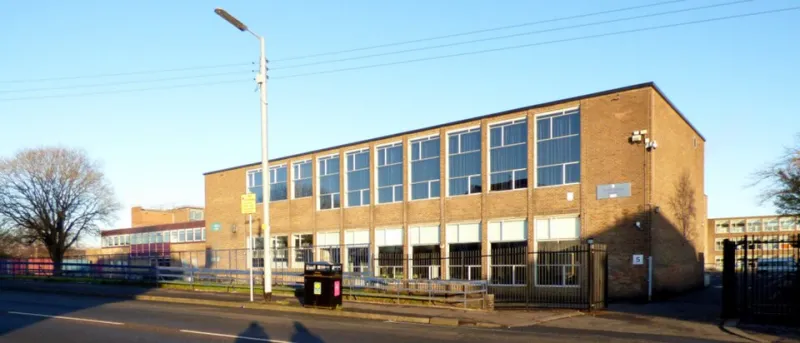
Photo: Thomas Nugent, CC BY-SA 2.0, via Wikimedia Commons
As the autumn term moves towards its final weeks, the familiar dilemma returns to classrooms across the country: keep the windows shut against the cold, or open them to refresh the air. At Bolitho, a group of pupils has spent recent weeks turning that everyday choice into a piece of disciplined research. Using a small number of low-cost carbon dioxide monitors, they compared classroom air before and after changes to window-opening routines as outdoor temperatures fell. Their aim was not to declare any room 'safe' or 'unsafe', but to understand what the readings could support and what they could not.
Why carbon dioxide became the focus
Carbon dioxide is produced by breathing. In an occupied room, concentrations rise when exhaled air accumulates and fresh air is not replacing it quickly enough. Outdoors, carbon dioxide levels are relatively stable and low; indoors, a rising reading can be a useful prompt that ventilation may need attention.
For schools, carbon dioxide is practical because it is easy to measure and easy to explain. It is not, however, a direct measure of infection risk, nor does it identify every pollutant that may be present. A low reading does not guarantee that air is clean, and a high reading does not prove that harm is occurring. UK school guidance has often used around 1,500 parts per million as a prompt to review ventilation rather than as a simple pass-or-fail line, and the pupils were careful to present their findings in that spirit.
The project also connected to a wider question about concentration. Poor ventilation is associated with stuffiness, discomfort and headaches, and those conditions can make learning harder. The evidence linking carbon dioxide itself to changes in attainment is more difficult to isolate, because classrooms vary in temperature, noise, lesson activity and pupil tiredness. The pupils therefore treated concentration as a reason to improve ventilation habits, not as something their monitors could prove on their own.
Designing a fair comparison in a working school
The pupil researchers began by placing monitors at seated breathing height, away from windows, doors, radiators and direct sunlight. They recorded the time, the number of pupils present, the type of lesson, the outdoor conditions and whether windows or vents were open. This context mattered: a reading taken in a busy classroom after lunch is not directly comparable with one taken in a half-empty room on a cold morning.
The first phase recorded existing routines. The second phase introduced a more structured approach: short bursts of window opening at break and before lessons, with trickle vents kept clear where they were fitted. The pupils tried to compare lessons of similar size and activity, and they noted when weather or timetable changes made a fair comparison impossible.
This was not a laboratory experiment. Schools are busy places, and the pupils were honest about that. They did not control every variable, and they did not attempt to calculate a precise effect. Instead, they looked for repeated patterns across several rooms and several days, and they asked whether those patterns were consistent enough to inform a sensible routine.
What the readings suggested
In several occupied classrooms, carbon dioxide readings climbed during lessons when windows remained closed. After a short period of opening windows, readings usually fell. Rooms with more pupils tended to rise faster, and some rooms retained higher readings for longer, suggesting that ventilation was slower or that the room was more enclosed.
The pupils were careful not to overstate these observations. A fall after opening a window is not surprising, but the size of the fall varied with outdoor temperature, wind and the length of time the window stayed open. Some monitors also responded differently from others, which reinforced the importance of treating low-cost devices as indicators rather than precision instruments.
The most useful outcome was not a single number but a set of habits. A short, well-timed opening at break appeared more practical than leaving windows open for long periods in cold weather. The pupils also found that ventilation is easier to manage when it is part of a routine rather than an emergency response to a stuffy room.
What a carbon dioxide number cannot show
Carbon dioxide readings cannot show whether viruses are present, nor can they identify the source of a particular smell or pollutant. They cannot tell a class whether the air is 'good' in every respect. A low reading may simply mean that a room is empty, and a high reading may reflect high occupancy as much as poor ventilation.
Monitors need sensible placement and regular checks. Low-cost sensors can drift over time, and readings can be affected by direct sunlight, nearby people or inadequate calibration. The pupils also recognised that their project could not separate the effects of fresh air from the effects of a break, a change of activity or a different teacher.
These limits do not make the project less valuable. They make it more honest. Pupil research is strongest when it states clearly what has been measured, what has been inferred and what remains uncertain.
The energy question
Opening windows in winter has a cost. Heat escapes, and schools face real pressure on energy budgets. The pupils' findings therefore led to a balanced recommendation rather than a call to keep windows open all day.
Managed ventilation means short purges at natural breaks, keeping trickle vents unobstructed, and using monitors to identify rooms that need attention. It also means avoiding unnecessary window opening in unoccupied rooms and checking that heating is not working against open windows. The aim is not to choose between fresh air and warmth, but to manage both with a routine that staff can sustain.
Three evidence questions for families
Families who want to understand air quality at school and at home can ask three simple questions without turning the conversation into a complaint.
- What is the agreed ventilation routine, and how does it change in cold weather?
- What evidence is collected, such as carbon dioxide readings, temperature and occupancy, and who reviews it?
- When readings are high on a cold day, what action is taken, and how is the trade-off with warmth explained?
The same questions work at home. When is a room ventilated? What evidence is available? Who notices when a room feels stuffy, and what do they do about it? These are practical questions that encourage observation rather than blame.
A modest but useful result
The Bolitho project has not produced a definitive answer to every question about classroom air. It has, however, given pupils experience of designing a comparison, recording context and interpreting imperfect data. It has also given the school community a shared vocabulary for discussing ventilation as part of a healthy learning environment.
The next phase will be to share the findings with the site team, compare routines across different rooms and consider whether a small number of monitors can be rotated to give a broader picture over the winter. For families, the lesson is simpler: good air is not a matter of guesswork alone. Careful observation, a sensible routine and honest questions can make a real difference.
This report forms part of Bolitho School Science Hub's Pupil Research strand, sharing how pupils are learning to gather evidence, weigh uncertainty and turn curiosity into practical improvements for the school community.