The Shelf of Honest Attempts: What Bolitho's Science Club Learned When Results Refused to Cooperate
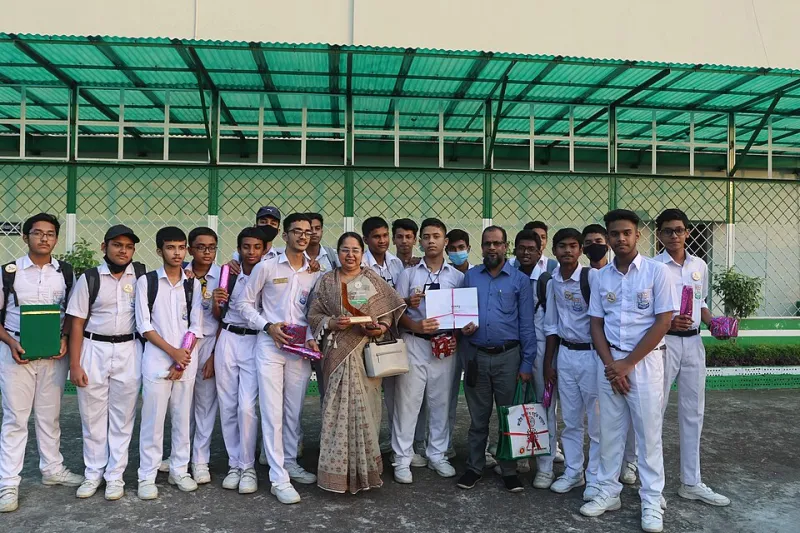
Photo: Shorif Khan 22, CC BY-SA 4.0, via Wikimedia Commons
On a corridor wall at Bolitho, the science club has assembled a display that does not look like a conventional celebration. A straw bridge sags in the middle. A crystal jar remains stubbornly cloudy. A small wind turbine has blades set at an angle that never produced the expected voltage. Each exhibit carries a card with three headings: what we tried, what happened and what we would change. The display is called the Beautiful Failure Shelf, and it has become one of the most useful teaching tools in the club.
A Display That Does Not Congratulate
The shelf began because pupils were hiding their unsuccessful attempts. They would present the one model that worked and quietly discard the three that did not. The result was a misleading picture of scientific work. The shelf was designed to correct that picture. It is not a museum of shame, and it is not a trophy cabinet. It is a record of process. A collapsed bridge is not displayed because collapse is admirable. It is displayed because the card explains where the joints failed, what load was expected and what the next design will change. The failure has been made legible.
Why Visible Failure Matters
Science is largely a process of revision. Results that do not match expectations are not an embarrassment; they are information. Yet school science often presents polished outcomes, and pupils can infer that competent scientists get it right first time. That inference is both false and unhelpful. A visible failure shelf normalises the idea that an experiment can be well designed and still produce an unexpected result. It separates the quality of the method from whether the result matched the pupil's hope. That distinction is central to scientific resilience.
Not Every Mistake Is Beautiful
There is a risk that a display of this kind romanticises error. It should not. Some mistakes are avoidable: a misread scale, an uncontrolled variable, an unsafe procedure or a measurement taken carelessly. Those errors need correction, not celebration. The shelf works only because its cards ask a further question: was the test fair, and was the measurement careful? If the answer is no, the pupil fixes the method and repeats the work. If the answer is yes, the unexpected result deserves discussion. This prevents the display from lowering standards. It raises them by asking pupils to distinguish an informative failure from a careless one.
The Mark-Scheme Problem at Home
Parents often want to help, and the first question is often, 'Did you get it right?' That question is understandable, but it can close a conversation. A mark scheme rewards a match with an expected answer. Scientific inquiry rewards an explanation of evidence. At home, the most helpful response is usually not immediate correction. It is a question that keeps the thinking visible. 'What did you expect to happen?' 'What did happen?' 'What changed between the two?' 'What would you try next?' These questions do not require a parent to know the answer. They require only patience.
Practical Ways to Talk About a Wonky Result
A few phrases can shift a conversation away from a mark scheme. Try: 'Tell me what you expected before you started.' 'What did you notice that you did not expect?' 'Was it a fair test, and what was varying?' 'What would you measure to be more sure?' 'Is this a result to keep or a method to fix?' Empty reassurance such as 'never mind' or 'you will get it next time' is kindly meant but often closes the topic. A more useful response is, 'That result is interesting because it tells us what the model does not yet explain.' The aim is not to make every child feel good about every error. It is to help them see that evidence, including disappointing evidence, is something to use.
What the Club Will Do Next
The shelf will continue to rotate. Each half-term, a new set of exhibits will appear with cards written by the pupils themselves. The club also plans a replication corner, where another group can repeat a failed experiment to see whether the result was a one-off. Parents will be invited to view the display during a science evening, not to admire failure, but to see how pupils are learning to describe their methods and evidence. The most valuable exhibits are often the least dramatic: a thermometer that drifted, a plant that grew towards the wrong light, a circuit that worked only when the battery was warm.
A Shelf, Not a Shrine
The Beautiful Failure Shelf is not a shrine to mistakes. It is a way of making thinking visible. Scientific resilience is not indifference to error. It is the habit of asking what an error can teach, and then acting on the answer. At Bolitho, the shelf has already changed the language pupils use. They are more willing to say 'we do not know yet' without embarrassment, and more able to explain what they would do next. That is not a consolation prize. It is an achievement.